Guide Overview
What Is Recruitment Management?
Recruitment management is the process of planning, approving, sourcing, screening, interviewing, selecting, and hiring candidates in a structured way. It helps businesses move from vacancy identification to final offer release with better visibility and less manual confusion.
In growing businesses, recruitment is often delayed not because talent is unavailable, but because workflow clarity is weak. Approval bottlenecks, interview coordination issues, and inconsistent candidate communication slow down hiring quality and speed.
What Are the Main Recruitment Workflow Stages?
A clear recruitment workflow usually follows a consistent sequence so hiring teams know where each candidate stands and what happens next.
Stage 1
Requisition
Define the role, budget, approval chain, and hiring owner before sourcing begins.
Stage 2
Selection
Move candidates through screening, interviews, assessments, and final evaluation.
Stage 3
Offer to Joining
Release the offer, collect documents, and prepare onboarding before day one.
Candidate Pipeline Control
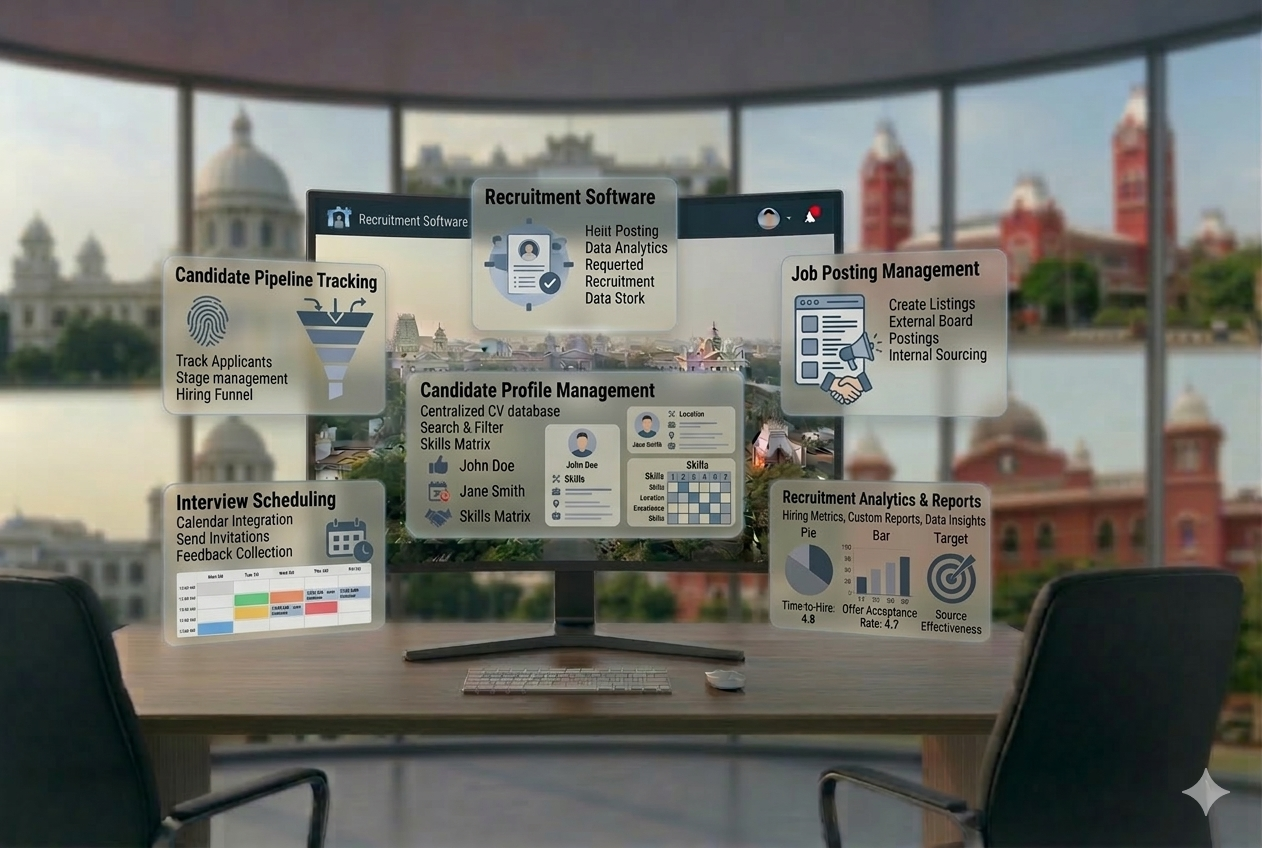
Candidate pipeline visibility is one of the most important elements of recruitment management. Teams should be able to see who is applied, shortlisted, interviewed, selected, rejected, on hold, or offer-ready at any time.
Why Pipeline Visibility Matters
When HR teams and hiring managers cannot see candidate stage movement clearly, decisions slow down. Candidates wait too long, interview coordination becomes messy, and offer readiness becomes unpredictable.
What Good Control Looks Like
Each stage should have a clear owner, expected action, and status update path so the pipeline reflects actual hiring progress rather than informal discussions.
Offer and Approval Process
Offer management is where many businesses lose momentum. Compensation approval, final hiring decision, joining date clarity, and candidate communication should all be handled in a defined workflow.
- Approve hiring decisions without long email chains.
- Track salary offer versions and decision history.
- Keep joining date, documents, and reporting manager details aligned.
- Reduce offer delays that increase candidate drop-off risk.
What Is Onboarding?
Onboarding is the structured process of preparing a new employee to join, settle in, and start contributing. It usually includes document collection, policy acceptance, employee record creation, payroll activation, ESS access, and manager-led readiness.
Good onboarding starts before day one, not after joining. When teams wait too long to prepare documents, access, and introductions, new hires experience confusion and delays immediately.
Onboarding Workflow Steps
A strong onboarding process creates consistency between HR, hiring managers, IT, payroll, and the employee.
1. Pre-Joining Document Collection
Collect identity documents, bank details, educational records, experience documents, and any compliance-sensitive forms before the joining date.
2. Employee Setup
Create the employee profile, assign department, reporting manager, location, and payroll-relevant details accurately.
3. Policy and Access Readiness
Ensure policy acknowledgement, ESS access, and first-day workflow clarity are available from the start.
4. First-Month Coordination
Connect onboarding with payroll activation, attendance marking, leave policy visibility, and manager support so the employee enters the workforce system cleanly.
Common Recruitment and Onboarding Challenges
Recruitment and onboarding become harder when hiring teams rely on spreadsheets, email chains, and manually coordinated follow-up. Common challenges include:
- Slow approval cycles for requisitions and offers
- Poor candidate stage visibility
- Inconsistent communication with candidates
- Delayed document collection before joining
- Weak coordination between HR, managers, payroll, and operations
These issues not only slow hiring but also weaken the new employee experience.
What Recruitment and Onboarding Software Should Automate
A good platform should not only track candidates but also connect the full hiring-to-joining journey in one controlled workflow.
Requisition and Hiring Flow
Support role approvals, hiring requests, pipeline stages, and decision visibility from one workflow.
Candidate Tracking
Track applied, shortlisted, interviewed, selected, rejected, and offer-ready candidates cleanly.
Document and Joining Workflow
Collect documents, maintain employee records, and prepare onboarding without repeated follow-up.
Connected HR Operations
Link onboarding with payroll, ESS, employee record creation, and reporting manager setup from the beginning.
In short, the right system should reduce hiring friction and improve joining readiness at the same time.
Conclusion
Recruitment and onboarding work best when they are treated as one connected process rather than separate activities. When requisitions, approvals, candidate pipeline, offers, document collection, and onboarding readiness are all visible in one workflow, HR teams hire faster and new employees settle in with less confusion. For growing Chennai businesses, this operational clarity is often what improves hiring consistency the most.