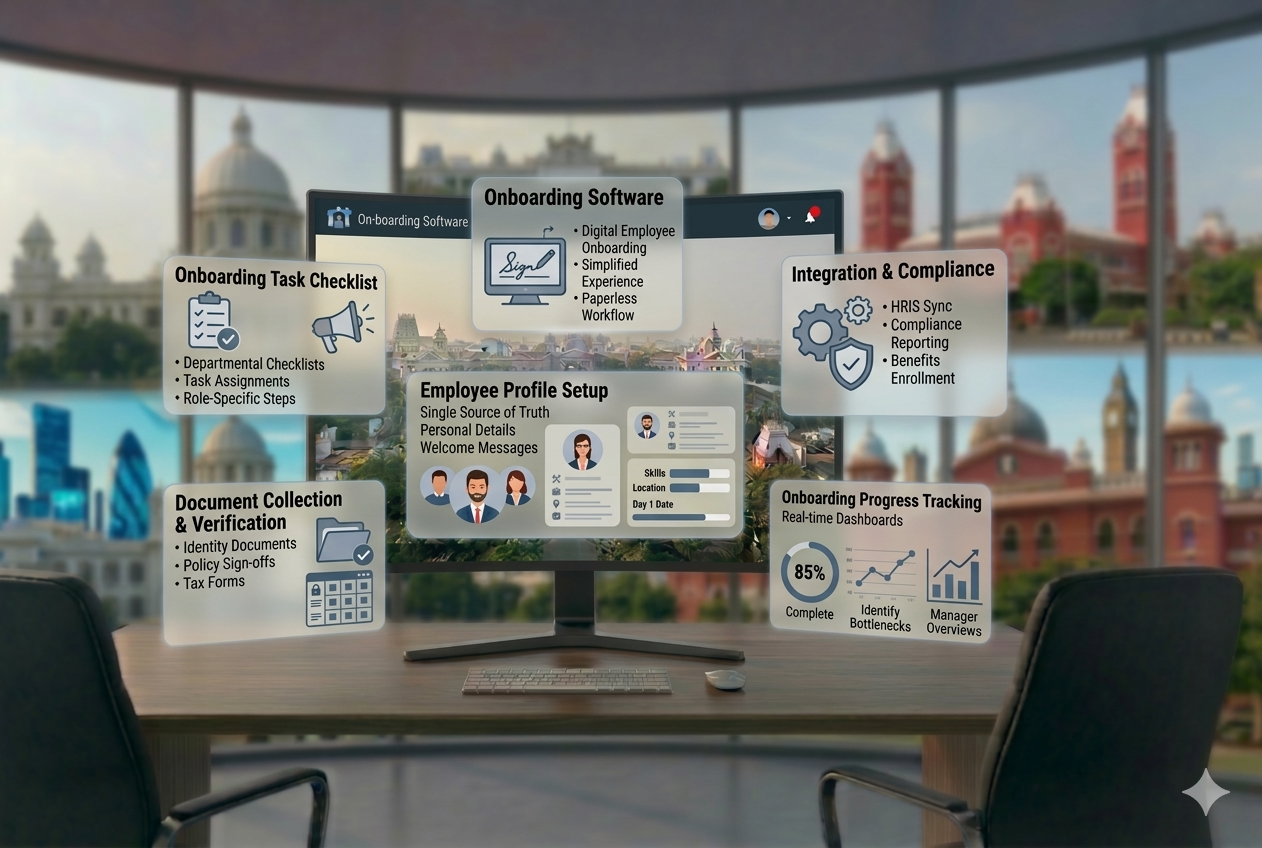
Guide Overview
What Is Employee Onboarding?
Employee onboarding is the structured process that prepares a selected candidate to join, settle in, and start contributing. It includes pre-joining communication, document collection, employee profile setup, policy acknowledgement, payroll readiness, access provisioning, and manager-led integration.
Good onboarding is more than orientation. It is an operational workflow that ensures the employee is not left waiting for forms, approvals, payroll setup, or role clarity after joining.

Why Offer to First Month Matters Most
The period between offer acceptance and the first month shapes how a new employee experiences the company. If onboarding is fragmented, employees feel unprepared, managers lose time, and HR spends too much effort resolving preventable issues.
- Pre-joining sets expectations: Candidates should know what documents, dates, policies, and reporting structure to expect.
- Day one should feel ready: Access, introductions, and role setup should not be delayed.
- First week should reduce uncertainty: New hires need orientation, workflows, and process clarity.
- First month should confirm integration: Managers and HR need simple checkpoints to see whether the employee is settling in well.
Pre-Joining Stage: What HR Should Complete Before Day One
Onboarding starts as soon as the offer is accepted. The pre-joining period is where HR prevents most avoidable joining-day delays.
Complete These Steps Before the Joining Date
- Collect identity proof, address proof, bank details, educational records, and experience documents.
- Confirm joining date, reporting manager, location, and department allocation.
- Share policy documents, joining instructions, and first-day expectations.
- Prepare employee master details needed for payroll and HR records.
Day-One Readiness: What Must Be in Place
Day one should not be used to start administrative preparation. It should be used to welcome the employee into a ready environment.
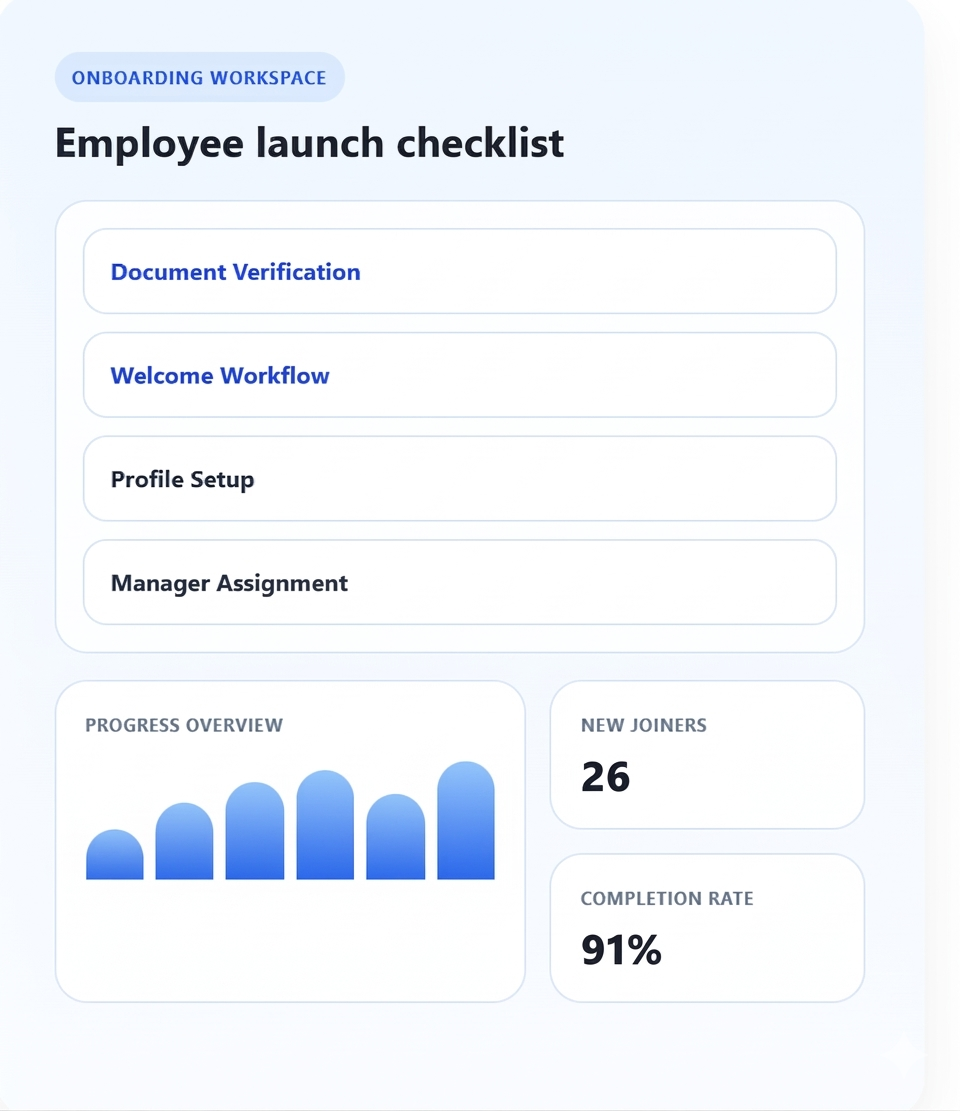
Day-one readiness checklist
- Employee profile created in the HR system
- Manager and department mapped correctly
- Payroll-relevant data ready for activation
- ESS or employee portal access shared
- Policies, attendance rules, and leave basics communicated
When these basics are ready, HR spends less time troubleshooting and the new hire starts with more confidence.
First-Week Workflow for a Better Joining Experience
The first week is where HR and managers turn a formal joining into a practical working experience. Employees should understand who they report to, what systems they use, and how the company expects them to operate.
- Introduce key people, teams, and reporting flow.
- Explain attendance, leave, payroll timelines, and ESS usage.
- Confirm role expectations, immediate tasks, and communication channels.
- Track missing documents or unresolved setup items quickly.
First-Month Checkpoints HR Teams Should Use
The first month is the best time to confirm whether onboarding has actually worked. Lean HR teams do not need a complex program, but they should use simple checkpoints.
Recommended first-month checkpoints
- Check if all documents and profile details are complete.
- Confirm employee attendance and payroll setup are accurate.
- Ask the manager whether the new hire has role clarity.
- Check whether the employee understands policies, tools, and escalation paths.
- Resolve any pending workflow or access gaps before they become retention issues.
What Onboarding Software Should Automate
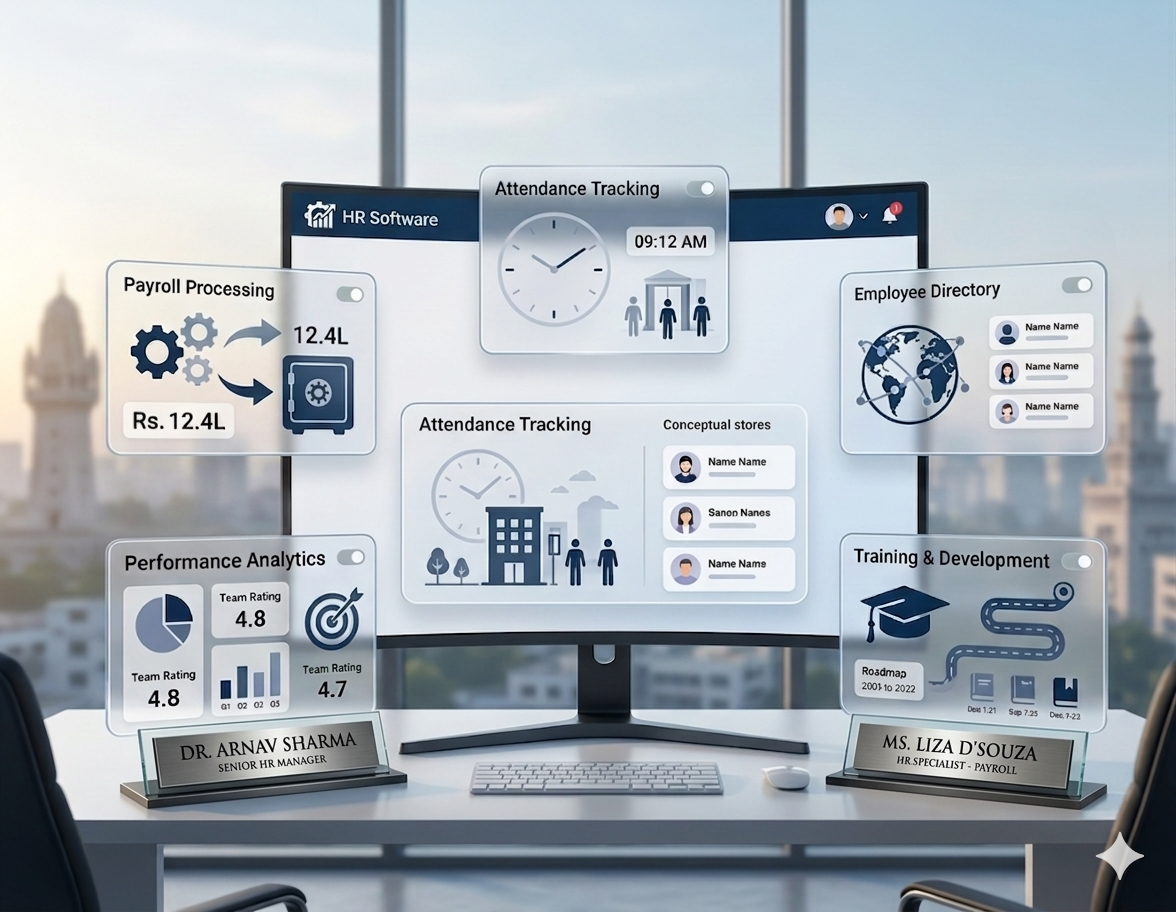
A strong onboarding platform should reduce repeated follow-up and keep HR, managers, and new employees aligned in one controlled process.
Document Collection
Collect and validate pre-joining documents without relying on scattered email attachments and manual reminders.
Employee Setup
Create employee records, assign reporting structure, and prepare payroll-linked data before the employee joins.
Policy and ESS Readiness
Share policies, portal access, attendance basics, and leave rules in one organized onboarding workflow.
Manager and HR Checkpoints
Track first-week and first-month follow-up tasks so onboarding quality stays measurable.
In practice, onboarding software is most useful when it connects recruitment outcomes with HR records, payroll activation, and first-month employee experience.
Conclusion
The best onboarding process is not just welcoming. It is operationally clear. When HR teams connect offer acceptance, pre-joining readiness, day-one preparation, first-week guidance, and first-month follow-up in one workflow, new employees settle faster and fewer issues spill into payroll, attendance, or manager coordination. For growing businesses, that clarity improves both employee experience and HR efficiency.