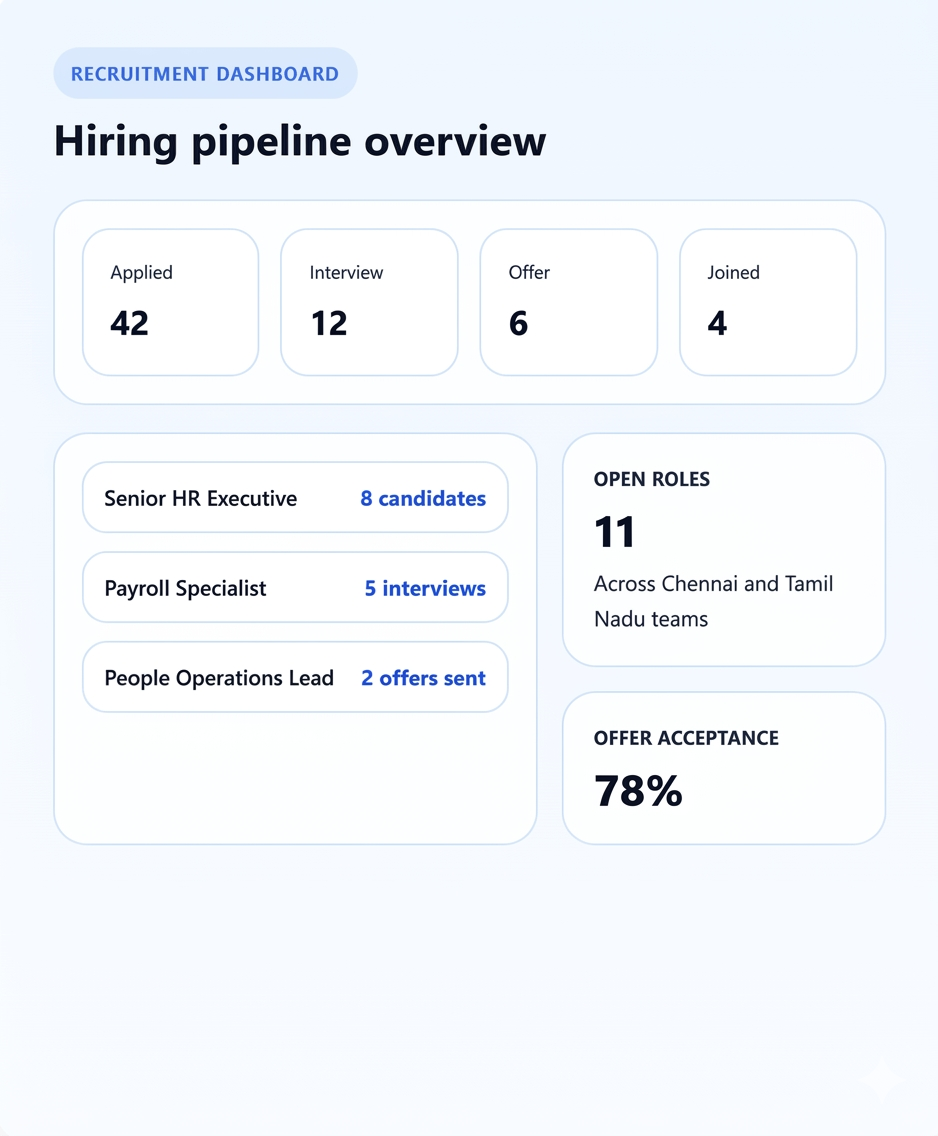
Guide Overview
What Is Recruitment Workflow?
Recruitment workflow is the step-by-step process that moves a hiring requirement from approval to candidate selection and then toward joining readiness. For lean HR teams, workflow clarity matters because fewer people are coordinating more hiring tasks at the same time.
A good workflow reduces ambiguity. It tells HR, hiring managers, interviewers, and approvers what happens next, who owns it, and where each candidate currently stands.

Why Lean HR Teams Need Recruitment Structure
Lean HR teams usually handle hiring along with employee records, payroll support, compliance tasks, and manager coordination. That means recruiting needs a process that is simple enough to run consistently but structured enough to prevent follow-up chaos.
- Less manual status chasing: HR should not depend on memory, scattered chat threads, or separate spreadsheets to know where hiring stands.
- Faster decision visibility: Managers can see when approvals, interviews, or offers are pending.
- Better candidate experience: Clear stage movement reduces avoidable silence and delay.
- Cleaner onboarding handoff: Selection data moves directly into pre-joining and employee setup steps.
Core Workflow Stages Lean HR Teams Should Define
A lean recruitment process does not need too many stages. It needs the right stages. The goal is to keep movement visible without creating administrative overload.
1. Requisition Setup
Define role details, location, salary band, hiring owner, and approval chain before sourcing begins.
2. Sourcing and Screening
Track candidate source, screening status, shortlist decisions, and recruiter notes in one place.
3. Interview Coordination
Schedule rounds clearly, capture feedback quickly, and prevent interview-stage delays.
4. Selection and Offer
Record final decision, compensation approval, offer version, and expected joining details.
Where Recruitment Bottlenecks Usually Happen
Most lean HR hiring problems do not start at sourcing. They start when workflow ownership becomes unclear. Delays usually appear in the same areas:
- Role requisitions remain pending without clear approval follow-up.
- Hiring managers take too long to review shortlisted candidates.
- Interview feedback stays in email and is not updated in the pipeline.
- Offer approval is delayed because compensation inputs are not centralized.
- Selected candidates reach joining without document or onboarding readiness.
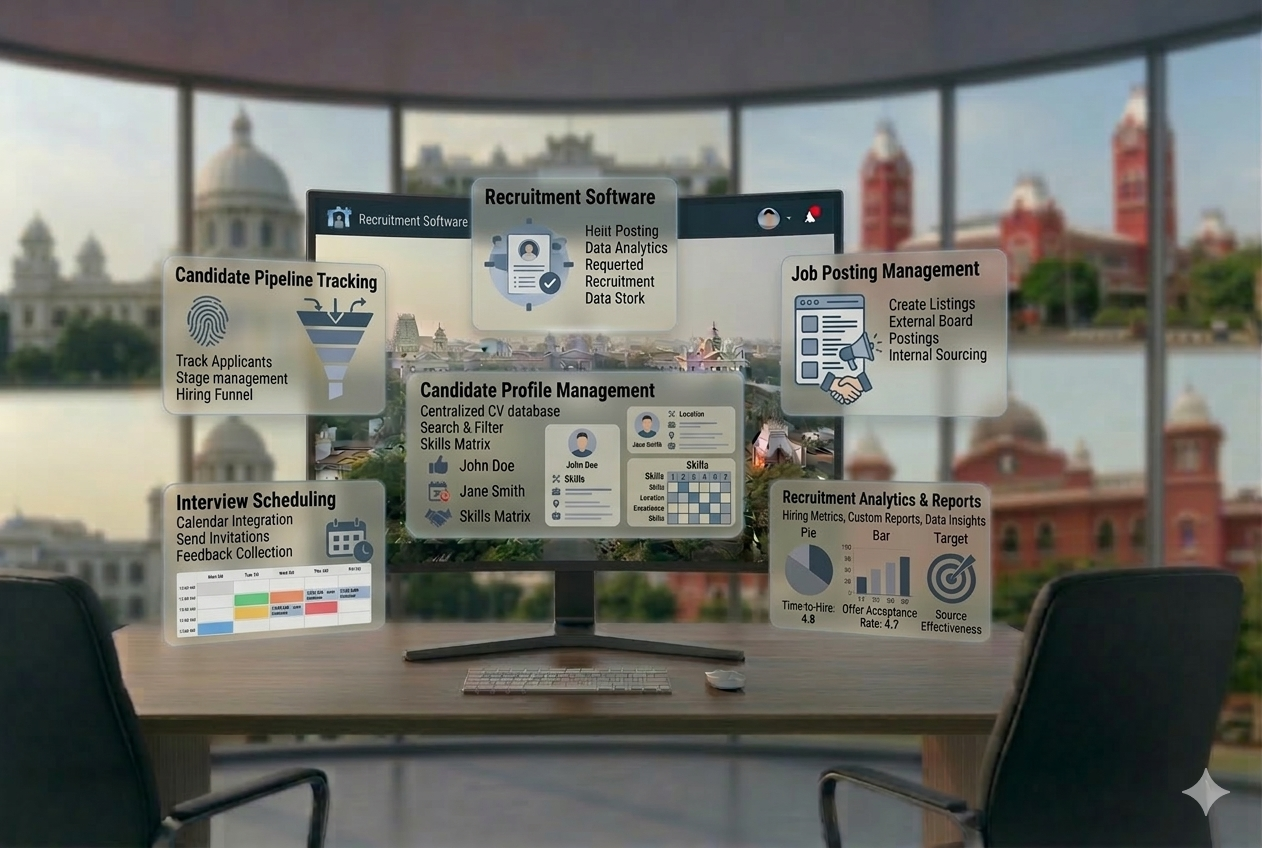
How to Control Candidate Movement Clearly
Candidate movement should be visible at a glance. For lean HR teams, that means fewer stages with stronger ownership rather than too many labels with no real process behind them.
Use a Stage-by-Stage Structure
- Applied
- Screened
- Shortlisted
- Interview In Progress
- Selected or Rejected
- Offer Released
- Joining Confirmed
Capture the Right Details in Each Stage
- Source and screening notes in early stages
- Interviewer feedback and next round plan during assessment
- Expected salary, notice period, and decision notes before offer
- Document readiness and joining date after selection
When teams record these details at the correct stage, the pipeline becomes operationally useful instead of being just a candidate list.
Offer Release and Onboarding Handoff
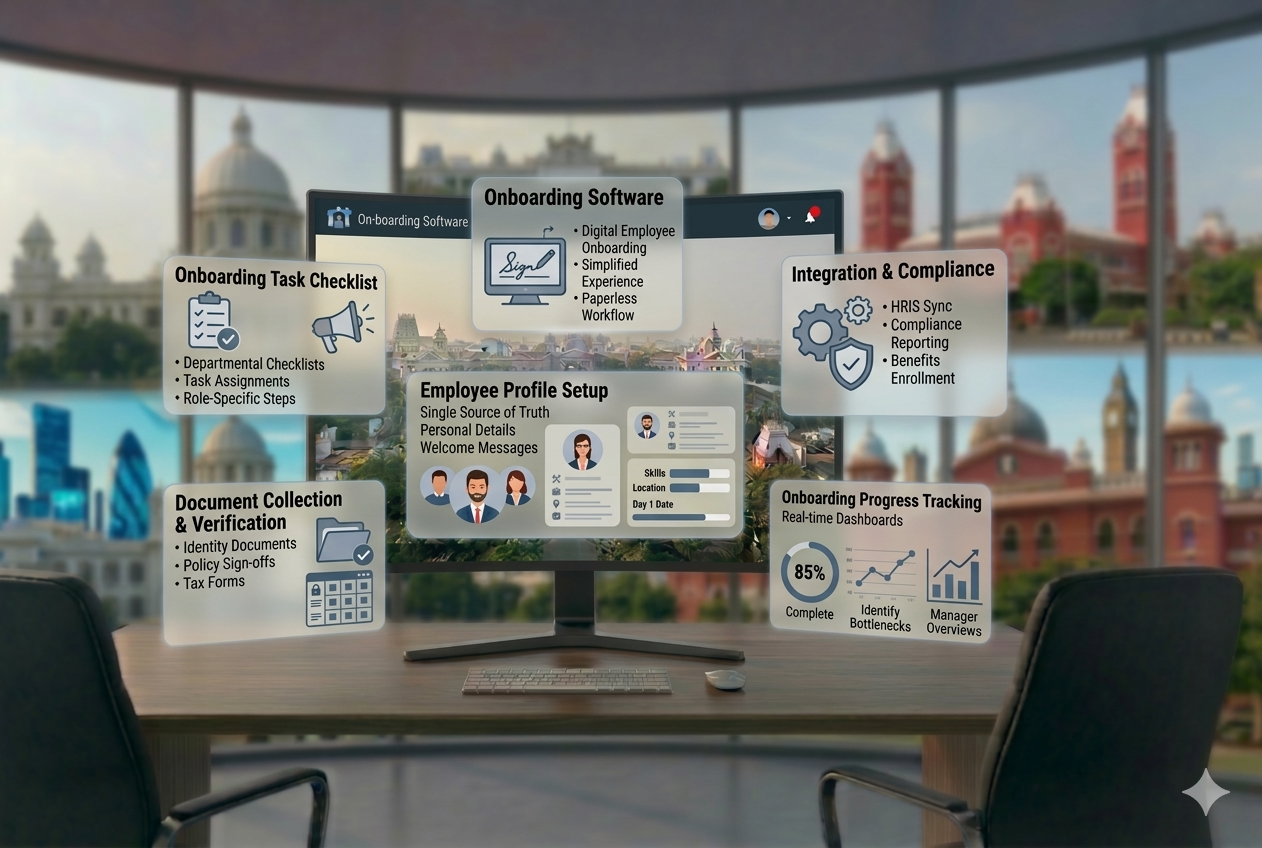
For lean HR teams, the hiring workflow should not stop at candidate selection. A strong process moves directly from selection into joining preparation so nothing is lost between recruitment and onboarding.
What should happen after final selection?
- Approve salary and role details.
- Release the offer with correct joining expectations.
- Collect key documents before day one.
- Prepare reporting manager, department, and employee setup details.
- Hand over joining-ready information to onboarding and employee records workflows.
What Recruitment Software Should Automate for Lean HR Teams
Lean teams benefit most from software when it reduces repeated follow-up work and centralizes stage visibility. A good recruitment system should help with the following:
Requisition Control
Manage role requests, approvals, department ownership, and hiring priorities without scattered email chains.
Pipeline Visibility
Track candidate movement from applied to selected with clear status, owner, and next-step visibility.
Interview Coordination
Capture schedules, feedback, pending rounds, and decision blockers in one workflow.
Offer and Joining Handoff
Move selected candidates into offer approval, document collection, and onboarding setup without duplicate entry.
In practice, lean HR teams should prioritize software that shortens follow-up cycles, reduces stage confusion, and improves hiring visibility for managers.
Conclusion
A lean HR team can still run an excellent recruitment process when the workflow is clear, stage ownership is defined, and hiring data moves cleanly from requisition to onboarding handoff. The best recruitment workflow is not the most complex one. It is the one that gives HR and hiring managers enough visibility to move candidates forward without confusion, delay, or repeated manual chasing.